

“Great that there are also vitamin D3 capsules made from algae! Better for me and great for nature!”

Why algae?
Our goal: to make algae a new food category, a regular part of everyone’s diet. Why? For three reasons:

Less impact on the planet
Producing food takes a lot from the earth. Algae do it fundamentally differently.
Less land
40× less land than soy, for the same amount of protein SourceCurrent Opinion in Biotechnology, 2022: microalgae 22–44 tonnes of protein per hectare per year, soy about 1 tonne
No unnecessary fishing
30 fish saved per softgel, compared with fish oil. SourceKeuringsdienst van Waarde (KRO-NCRV): 20–100 kilos of fish per litre of fish oil
Grows on CO₂
1.88 kg of CO₂ absorbed per kilo of dry algae. SourcePavlik et al., Algal Research, 2017: 1.83–1.88 kg CO₂ per kilo of dry algae
Good for the planet. And what does it do for you? Read more about People

Nutrients many people miss
Many Dutch people don’t get enough of a few essential nutrients. Algae contain them naturally.
And this is only the beginning. Read more about Potential

The science is only just starting
Algae contain unique bioactive substances that scientists see a lot of potential in. The research is young and moving fast.
Spirulina and inflammation markers Meta-analysis · humanMousavi et al., 2025: 22 studies, 5,385 participants.
Astaxanthin and the skin Clinical studies · humanNg et al., 2021: systematic review of 11 studies, mostly small and short.
Chlorella and gut bacteria Systematic review · mostly animal studiesFelip et al., 2026: 10 studies, mostly in animals. What it means for you, we don't know yet.
Why so few official claims? The EU assessment of claims for plant substances has been on hold since 2010. Not rejected, but never assessed.
Interested? See all our products

Most D3 supplements are made from lanolin: the fat from shorn sheep's wool. This is followed by chemical processes to eventually transform it into vitamin D3. But did you know that you can also obtain vitamin D3 from algae, without chemical processing and 100% natural?
For vitamin D3 from sheep's wool, wool grease is first chemically purified of dirt, manure, and pesticides. Algae, on the other hand, are grown in clean conditions and produce vitamin D3 under UV light. No animal, no chemical solvents, no detour.
Vitamin D3 is the form your body produces as soon as the sun shines on your skin. Algae do the same: under UV light, they produce exactly the same vitamin D3. No sheep are required for that.
The same vitamin D3 that your skin produces in the sun, supplemented with vitamin K2. Good for your immune system, bones and muscles.
Vitamin D contributes to the normal function of the immune system.
Vitamin D and vitamin K contribute to the maintenance of normal bones.
Vitamin D contributes to the maintenance of normal muscle function.

“Why take a chemical detour through sheep's wool, when nature provides it directly via algae?”


“Great that there are also vitamin D3 capsules made from algae! Better for me and great for nature!”
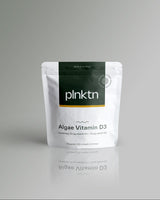
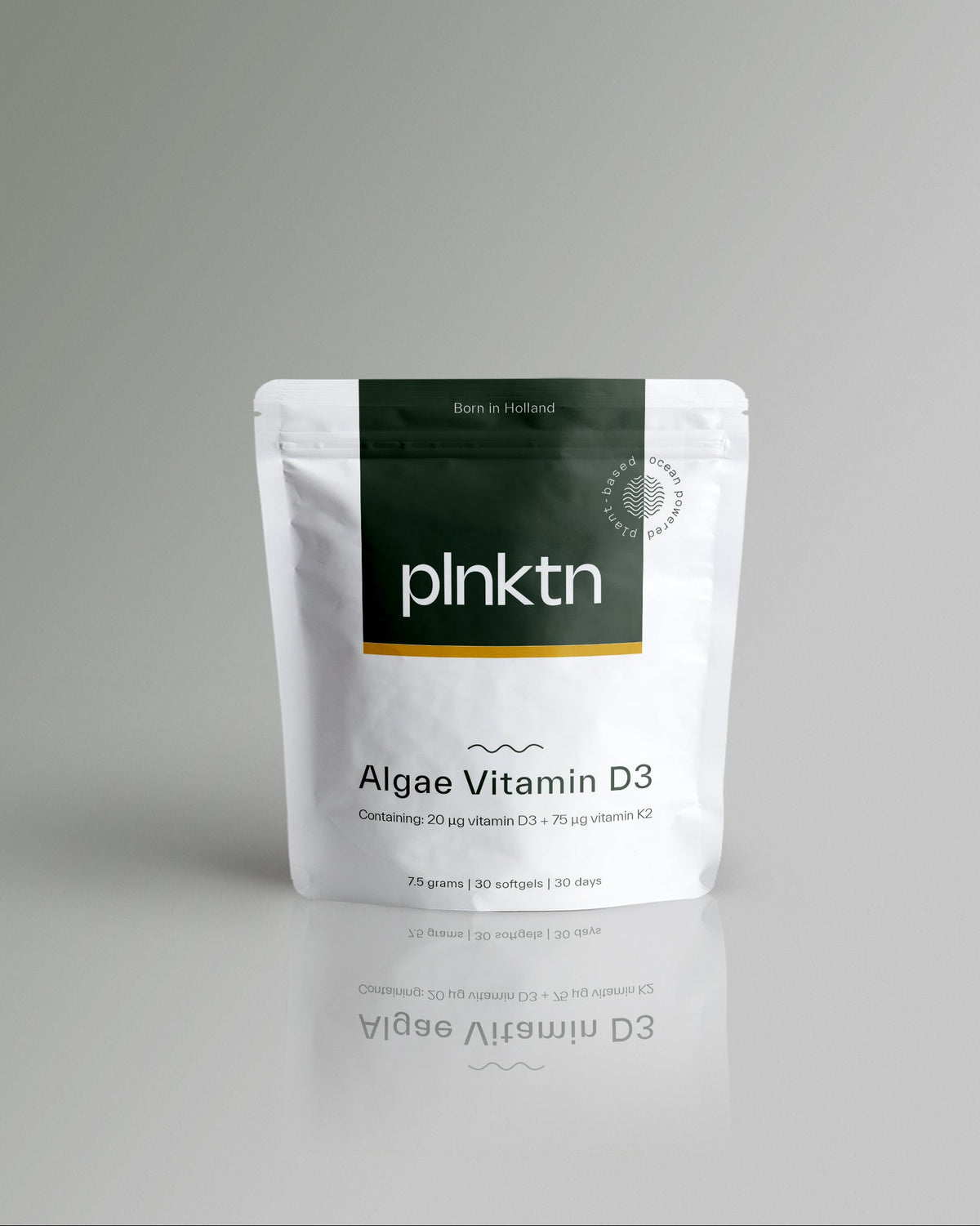
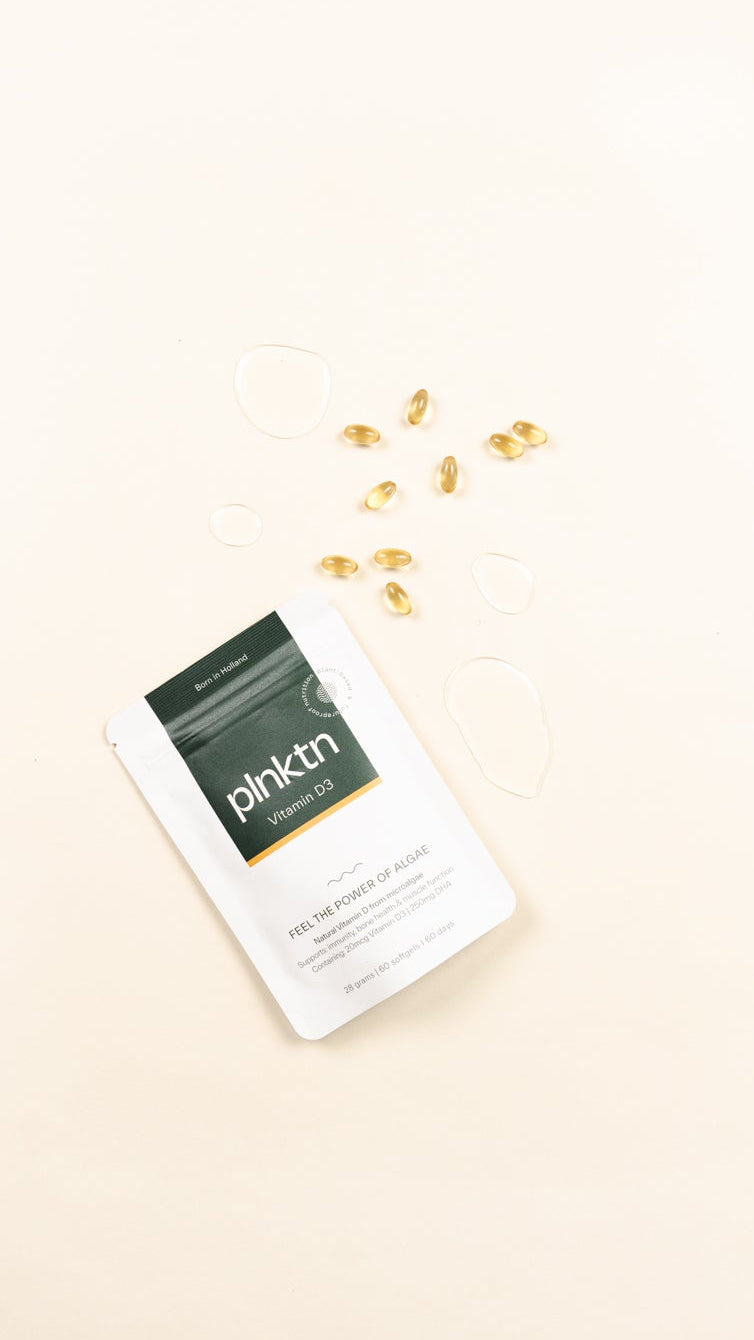
Vitamin D3 from plnktn is a fully plant-based vitamin D3 supplement made from algae. This makes it an alternative to the most commonly used source of vitamin D3: lanolin, the fat from sheep's wool. In our formulation, we combine vitamin D3 with vitamin K2, which helps direct calcium to the bones.
 Support the immune system
Good for muscles & bones
Plant-based vitamin D3 from algae
Met vitamine K2 voor een goede calciumhuishouding
“Great that there are also vitamin D3 capsules made from algae! Better for me and great for nature!”
 71% of our regular customers immediately opted for a subscription (up to 24% cheaper per month & incl. free storage jar)


Ingredients
MCT oil, vitamin K2 (menaquinone-7), vitamin D3 from algae. Capsule: glycerol, modified pea starch, carrageenan.
Nutrition
| Nutrient | Amount | % RI |
|---|---|---|
| Vitamin D3 | 20 µg | 200 |
| Vitamine K2 | 75 ug | 100 |
| Analysis | Unit | Norm | Result |
|---|---|---|---|
| Vitamine D3 | µg | >20 | 25 |
| Vitamine K2 | µg | >75 | 85 |
Delivery issues? Contact us here and we'll help you as soon as possible.


Most vitamin D3 is made from lanolin, the fat from sheep's wool, and then goes through multiple chemical processes. Our vitamin D3 comes directly from algae: the same molecule, without animals and without chemical detours.

Frequently asked questions, answered by our nutrition scientists.
Vitamin D is a fat-soluble vitamin that the body can produce itself when exposed to sunlight. It is important for your immune system, muscles, and bones.
A vitamin D3 deficiency is more common:
A deficiency occurs more frequently, particularly during the winter months. Do you spend a lot of time indoors? And are you unsure whether you are getting enough vitamin D3 from the sun or your diet? Then a supplement is a solution to keep your vitamin D3 levels on track.
Our vitamin D3 comes from algae and is therefore a 100% plant-based alternative to many other vitamin D3 supplements. These are often made from lanolin: sheep's wool grease.
In addition, we combine 20 µg of vitamin D3 with 75 µg of vitamin K2. Vitamin D supports the absorption of calcium, and vitamins D and K contribute to the maintenance of strong bones.
This way, you get vitamin D3 from a plant-based source, combined with K2 in a single capsule.
The recommended daily allowance (RDA) is 10 mcg per day.
We recommend 1 capsule per day. Vitamin D3 is best taken with a meal, as it is a fat-soluble vitamin.
Yes, it is free of allergens.
Yes, it is safe to take during pregnancy and while breastfeeding.
MCT oil, vitamin K2 (menaquinone-7), vitamin D3 from algae. Capsule: glycerol, modified pea starch, carrageenan.
Vitamin D is the umbrella term. D3 is the form that the body best recognizes, absorbs, and therefore uses.
A deficiency is not always immediately noticeable. Fatigue, listlessness, or getting sick more often can be signs. If you are in doubt, a test through your GP can provide clarity.
Yes. Vitamin D3 from algae has the same effect.