Fucoidan

Fucoidan
Fibers
A rare fiber from seaweed that is found almost nowhere else. It is being investigated for its prebiotic properties.

Bloated after eating, energy slumping, fluctuating skin. Read why variety in your diet makes all the difference — and what role algae play in that.
You usually notice intestinal complaints as bloating or constipation. But your intestines are connected to the rest of your body, and that's often where you notice it first.

You get energy from what you absorb, not from what you eat. If that absorption is difficult, you'll feel it in your day.

Skin and the gut are increasingly being studied together. For many, fluctuating skin is the first sign.

Most of your immune cells are located around your intestines. Your intestinal wall is therefore one of the most important boundaries your body protects.
Scientists have known for years: the more different plants you eat per week, the healthier your gut microbiome. The norm is 30+ types per week, but most people only manage 13.
Algae contain fiber, antioxidants, and nutrients that nourish your microbiome and intestines. For example, it contains:
A rare fiber from seaweed that is found almost nowhere else. It is being investigated for its prebiotic properties.

The blue pigment from spirulina, the subject of extensive antioxidant research.

From lithothamnium, a calciferous red algae. Contributes to the normal function of digestive enzymes.

The green pigment that gives algae their color. Research describes a role in the large intestine.

Fibers found in chlorella. Can serve as a substrate for gut bacteria.

Pigment from wakame, investigated for its antioxidant effect.

Naturally present, along with iodine. Both contribute to normal energy-yielding metabolism.

Pigment from chlorella, investigated for its antioxidant properties.
A rare fiber from seaweed that is found almost nowhere else. It is being investigated for its prebiotic properties.
Fibers found in chlorella. Can serve as a substrate for gut bacteria.
The blue pigment from spirulina, the subject of extensive antioxidant research.
The green pigment that gives algae their color. Research describes a role in the large intestine.
Pigment from wakame, investigated for its antioxidant effect.
Pigment from chlorella, investigated for its antioxidant properties.
From lithothamnium, a calciferous red algae. Contributes to the normal function of digestive enzymes.
Naturally present, along with iodine. Both contribute to normal energy-yielding metabolism.
Four carefully selected micro- and macroalgae, each with its own unique nutrients for your gut.
Cultivated in Oldenzaal (the Netherlands) in closed fermentation tanks, for the highest possible quality. Rich in B vitamins, including B12.
Cultivated in Catalonia (Spain) and dried at a low temperature to preserve all its nutritional values. Spirulina contains calcium, iron, and the antioxidant phycocyanin.
Grown in Brittany (France) in a protected marine ecosystem. Wakame is a natural source of iodine and contains various fibers and minerals.
Collected from the Icelandic coast, exclusively from naturally detached seaweed. Lithothamnion is a mineral-rich source of calcium and magnesium.

“Plankton contains the four most nutritious algae, specially formulated to support your gut health.”


Pippa van Iersel, Douwe Macare and 12,000+ others use plnktn


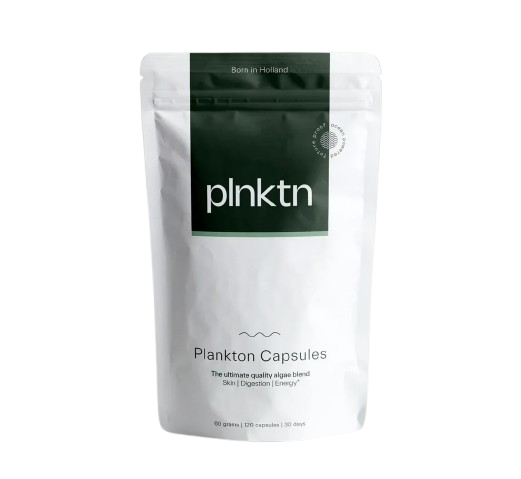
A blend of 4 nutritious algae. Your responsible & natural boost.
 Gives you an easy 75+ nutrients
 Daily, for the core of your health
 100% natural & European grown
 71% of our regular customers immediately opted for a subscription (up to 24% cheaper per month & incl. free storage jar)


Ingredients
Chlorella sorokiniana, Limnospira platensis (spirulina), Lithothamnium calcareum, Undaria pinnatifida (wakame), HPMC capsule
Nutrition
| Nutrient | Amount | % RI |
|---|---|---|
| Calcium | 123 mg | 15 |
| Iodine | 56.2 µg | 37 |
| Phycocyanin | 70 mg | — |
| Chlorophyll | 10 mg | — |
| B12 | 0.84 μg | 33 |
Delivery issues? Contact us here and we'll help you as soon as possible.




We believe that you can get all nutrients from nature, without synthetic additives or unnecessary processing.


Frequently asked questions, answered by our nutrition scientists.
If you're looking for a natural way to support your daily health, plankton is for you!
While everyone is unique, our bodies largely need the same essential nutrients. Plankton offers an easy, daily supplement for your overall health. It contains an enormous amount of minerals, vitamins, antioxidants, fiber, and protein, all of which contribute to a healthy lifestyle.
Plankton stands out due to its unparalleled nutritional density. With just 2 grams a day, you'll already notice a difference.
Furthermore, the natural origin of these four micro- and macroalgae is what makes plankton unique. While other supplements are often synthetic and contain excessively high dosages, plankton is 100% natural and plant-based, without synthetic additives.
The perfect, naturally balanced addition to a healthy and varied diet.
Of course, nothing is mandatory! However, we do recommend a maintenance dosage of 2 grams (4 capsules) per day as a supplement to a varied diet and a healthy lifestyle.
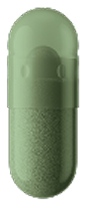
The capsules are made of HPMC (hypromellose), a plant-based polysaccharide known for being easily digestible.
As far as is known, our algae are free from allergens.
However, the product may contain traces of fish, crustaceans and shellfish because the algae mix contains two types of seaweed.
Plankton is safe for children. For children up to 10 years old, we recommend 2 capsules per day due to the higher iodine content.
For pregnant and breastfeeding women, we recommend discussing this with your doctor first.
Algae are rich in nutrients and require few resources to grow. They convert CO₂ into oxygen and valuable biomass, thus forming a sustainable food source.
Marine phytoplankton are microscopic algae that live in the sea. They are packed with essential fatty acids, antioxidants, and minerals.
The recommended dosage (2 grams, 4 capsules) contains approximately 60% of the daily recommended amount of iodine. Consult your doctor (or general practitioner) if you have a thyroid condition.
Chlorella sorokiniana, Arthrospira platensis (Spirulina), Lithothamnium calcareum, Undaria pinnatifida (Wakame). Capsule: HPMC capsule.
Yes, plankton capsules can be combined with omega-3 supplements. Adjust your total intake to your personal needs.